
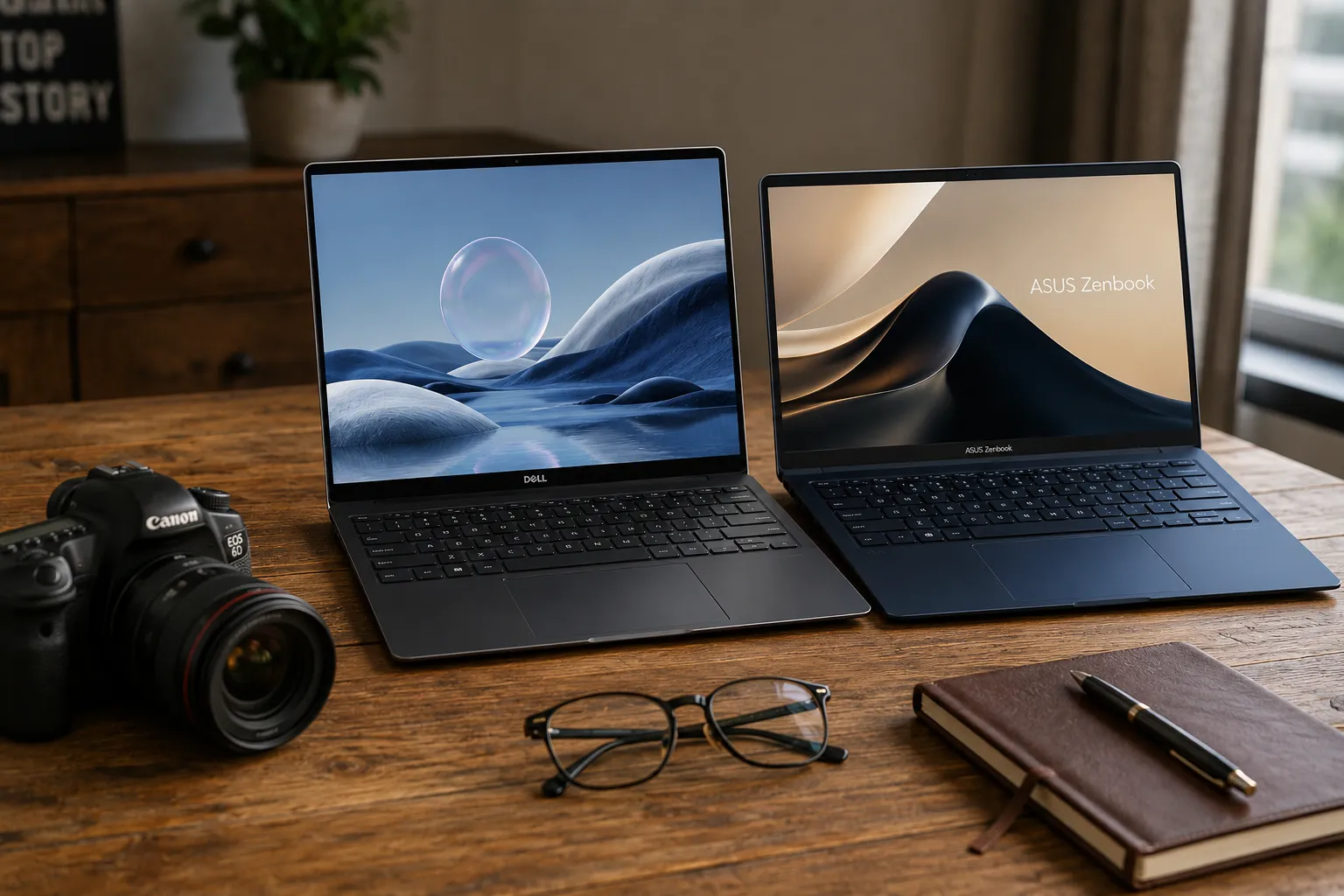
A comprehensive 1,500-word story-style review comparing the Dell XPS 14 vs ASUS Zenbook 14 OLED. We analyze zero-lattice keyboards, Lumina OLED panels, and sustained Copilot+ AI performance.
The Comprehensive Comparison Review
The Executive Workspace and True Mobile Mobility Quotient
The sub-14-inch premium laptop space has officially graduated from standard internal chip updates, morphing into an architectural battleground between minimalist corporate luxury and lightweight functional versatility. The Dell XPS 14 stands at the absolute vanguard of futuristic industrial design. Machined from solid, blocky aerospace aluminum, it presents an uncompromising, hyper-modern aesthetic that completely reimagines how a user interacts with a PC, incorporating an invisible glass haptic deck and a seamless zero-lattice keyboard array to serve executive creators.
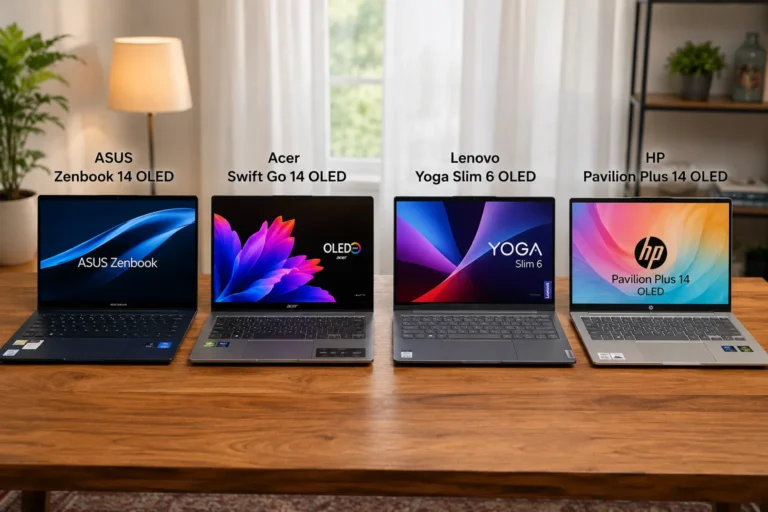
Conversely, the ASUS Zenbook 14 OLED serves as a masterclass in elegant, ultra-portable mobility tailored for the agile modern professional. Abandoning generic metal coatings entirely, its lid is sculpted from a proprietary Ceraluminum composite—a high-tech ceramic-aluminum matrix that is completely scratch-proof and entirely resistant to oily finger smudges. Weighing in at an astonishingly light 1.2 kg compared to the Dell’s heavier 1.68 kg frame, ASUS prioritizes true, shoulder-friendly transit without stripping away core legacy inputs.
This head-to-head evaluation tracks the deep narrative of how these two ultra-portables balance continuous productivity against raw daily ergonomics.
THE VISUAL, AI, AND PERFORMANCE GRID
- The Keyboard, Touchpad, and Ergonomics Interface:
Human input boundaries dictate long-term workspace typing endurance. The Dell XPS 14 introduces a striking, flat zero-lattice keyboard profile where individual keycaps hold completely flush boundaries against each other. Directly below it sits a continuous, solid pane of Gorilla Glass that entirely hides the touchpad. Moving your fingers over the smooth surface activates localized piezoelectric actuators beneath the glass, mimicking the physical click click of a mechanical trackpad with excellent precision.ASUS targets standard, reassuring analog feedback layout rules. The Zenbook 14 OLED features deep, sculpted dish keycaps with a generous 1.4mm of physical key travel that provides a soft, springy, and immensely satisfying typing bounce. Its traditional, extra-large glass trackpad is clearly defined and incorporates ASUS’s hidden LED NumberPad array directly into the touch surface, letting accounting professionals type numbers instantly during intense spreadsheet operations. - The Display Architecture: Lumina OLED vs. Infinite Contrast Maps:
Visual panel properties act as the primary window into complex data sets and creative suites. The Zenbook 14 comes standard with an elite 14-inch 3K ASUS Lumina OLED display running a fluid 120Hz refresh rate. It covers 100% of the digital cinema DCI-P3 color space, blasting up to 600 nits of localized peak HDR brightness while delivering deep, infinite contrast loops that make dark text segments pop off the panel with absolute ink-like purity.Dell treats its screen as an optional hardware tier upgrade. While the base XPS ships with a standard IPS screen, checking the premium configuration block unlocks a striking 3.2K Tandem OLED panel. This dual-stack glass configuration achieves phenomenal full-screen sustained brightness levels that comfortably slice through office overhead window glare, though its hyper-reflective glossy coating behaves slightly more like a mirror in direct sunlit conditions. - The Copilot+ AI Quotient and Silicon Core Power:
Modern productivity demands discrete neural compute power to process massive data arrays natively. The Zenbook 14 OLED relies on high-efficiency internal processors paired with a dedicated Neural Processing Unit (NPU) capable of clearing past 48 TOPs of raw AI computing velocity. It handles native Copilot+ features effortlessly—including Windows Cocreator sketching loops, real-time translated live captions, and fast portrait background framing filters entirely on-device without taxing the main battery.The Dell XPS 14 shifts its narrative away from pure battery efficiency toward brute-force hardware performance. It pairs its processing silicon with an optional NVIDIA GeForce RTX 4050 discrete graphics card running on a highly stable thermal envelope. This dedicated GPU engine completely dominates the integrated graphics of the ASUS when executing intensive, heavy 3D multi-layered rendering tasks or compiling complex engineering code scripts. - Acoustic Venting Cycles & Thermal Overdrive Tracking:
Dissipating heat out of tight 14-inch aluminum frames requires highly precise engineering. The Zenbook 14 OLED utilizes a widened, low-profile internal cooling fan path that allows the system to remain whisper-silent at 0 dB during standard document editing or web browsing tasks. Under sustained multi-tasking loads, the single fan spins up to a gentle, non-intrusive 38 dB hum.The Dell XPS 14 handles its heavier discrete GPU thermal load via a robust dual-fan configuration wrapped around dense vapor chamber radiators. When running active video exports or database tracking operations, these fans push out a louder, more noticeable 46 dB air rushing signature. The aluminum base frame acts as a secondary heat conductor, getting noticeably warm to the touch along the top capacitive touch row during intensive compute sprints. - Peripheral Connectivity and IO Port Versatility:
The daily workflow layout reveals a massive structural divide between these two machines. Dell chooses a completely minimalist approach, stripping the XPS 14 down to three Thunderbolt 4 USB-C ports and a microSD slot, forcing professionals to rely constantly on external adapter dongles to plug in standard office accessories.ASUS completely unseats Dell in real-world office utility. Despite its paper-thin frame, the Zenbook 14 OLED integrates a full-sized HDMI 2.1 output port, two high-speed Thunderbolt 4 USB-C lanes, a standard USB 3.2 Type-A port, and a headphone combo jack natively into its sides. This layout lets job holders walk straight into any conference room and plug into projectors or backup storage arrays instantly without carrying extra cords. - Battery Longevity & Real-World Power Endurance:
Unplugging from the wall changes the performance narrative completely. The ASUS Zenbook 14 OLED packages a high-density 70Wh battery cell that works alongside its efficient architecture to comfortably deliver an astonishing 14 to 17 hours of continuous web browsing or office spreadsheet editing on a single charge.The Dell XPS 14 packs a larger physical battery, but its high-power discrete graphics card and dense pixel display pull significantly more electrical current under load. Real-world mixed workflow testing clocks the XPS 14’s battery life around 7 to 9 hours of continuous use before triggering the low-power warning screen, requiring you to pack its wall charger for long business days.
The Sonic and Visual GRID : 4 Content Test Benchmarks
1. The Multi-Layer Excel & PowerBI Compilation Sprint (The Office Test)
- Dell XPS 14: The zero-lattice keycaps provide a unique, ultra-flat typing surface that lets your fingers slide rapidly between rows once you adapt to the layout. The discrete GPU processes massive data visualization graphs instantly without a single frame skip, though the touch function row turns off automatically after brief idling periods to save power.
- ASUS Zenbook 14 OLED: The 1.4mm long-travel keys deliver a beautifully soft, tactile click sound that makes multi-hour typing feel completely effortless. Activating the hidden NumberPad on the trackpad lets you type financial data rapidly, while the processing chip manages background data changes completely cool and in total silence.
2. “Blade Runner 2049” — The Neon Skyline Flyby (HDR Video Grading)
- Dell XPS 14: The upgraded Tandem OLED panel produces an exceptionally intense, bright visual field that makes glowing neon elements shimmer beautifully. The upward-firing stereo speaker columns project a broad acoustic stage with clear vocal tracking, though the glossy screen picks up visible lamp reflections in a bright office space.
- ASUS Zenbook 14 OLED: The Lumina 3K OLED screen displays an incredible, cinematic image. The infinite contrast ratios lock background dark spaces to pure, ink-like blacks with absolutely zero backlight bleeding. The Dolby Atmos certified super-linear speakers deliver a warm, balanced audio soundstage with noticeable stereo separation.
3. 4K Premiere Pro Video Export Run (The Creative Studio Test)
- Dell XPS 14: The dedicated hardware encoding cores inside the NVIDIA RTX 4050 GPU slice through 4K timeline exports with impressive velocity, outstripping the integrated graphics of the ASUS. The internal cooling fans spin up immediately to maximum speed to keep internal temperatures safe.
- ASUS Zenbook 14 OLED: Handles basic 1080p and light 4K video editing cleanly, but the absence of a dedicated discrete graphics processor means the final export rendering cycle takes noticeably longer to complete, making it better suited for general mobile office management than heavy daily video production.
4. The Transit Backpack Challenge (True Travel Portability)
- Dell XPS 14: Slipping the 1.68 kg aluminum chassis into a standard leather briefcase adds a noticeable, heavy structural weight to your shoulder. Its beautiful, borderless build draws immediate attention when opened at a coffee shop table, but you must map out your seating location near an available wall outlet.
- ASUS Zenbook 14 OLED: At an ultralight weight under 1.3 kg, you completely forget this paper-thin laptop is resting inside your bag. The scratch-proof Ceraluminum lid shrugs off contact with loose pens and keys beautifully, and you can comfortably work away from a charger for a full international flight with absolute peace of mind.
TECHNOSYNE SCORE & VERDICT
Who Is It For?
- Choose the Dell XPS 14 if: You are an enterprise professional, developer, or light creative editor who wants a bold, futuristic executive design language, demands a dedicated NVIDIA graphics card for fast rendering speeds, and works primarily near a desk or power source.
- Choose the ASUS Zenbook 14 OLED if: You are a mobile job holder, business traveler, or student who demands an ultra-light, featherweight chassis, requires exceptional long-lasting battery life, wants an industry-leading 3K OLED panel out of the box, and needs a full array of native connection ports.
Highs & Lows
Dell XPS 14
- HIGH: Futuristic, solid aluminum unibody design with a smooth, hidden glass haptic trackpad.
- HIGH: Dedicated NVIDIA RTX 4050 graphics overhead for light 3D rendering and fast video exports.
- LOW: Bare connection array drops standard USB-A and HDMI ports entirely, forcing dock reliance.
- LOW: Noticeably heavier chassis weight with lower real-world battery endurance under heavy load.
ASUS Zenbook 14 OLED
- HIGH: Ultra-light weight with a revolutionary scratch-proof Ceraluminum outer shell.
- HIGH: Outstanding 3K 120Hz Lumina OLED display bundled completely as a standard feature.
- HIGH: Stellar port versatility includes a built-in HDMI 2.1 out and a high-speed USB-A lane.
- LOW: Integrated graphics architecture slow down multi-layered 3D engineering render speeds.
- LOW: The classic keyboard layout lacks the striking, futuristic look of Dell’s seamless deck.
Final Conclusions & 6-GRID Alternatives
The ASUS Zenbook 14 OLED claims the absolute crown for real-world office value, travel mobility, and out-of-the-box display dominance, earning its top placement on our Laptops & PCs Signature Grid Tier. However, if you require a dedicated graphics card to process heavy rendering workloads and want a futuristic design piece, the Dell XPS 14 remains a beautiful hardware statement.
Technosyne 6-GRID Alternatives Combo:
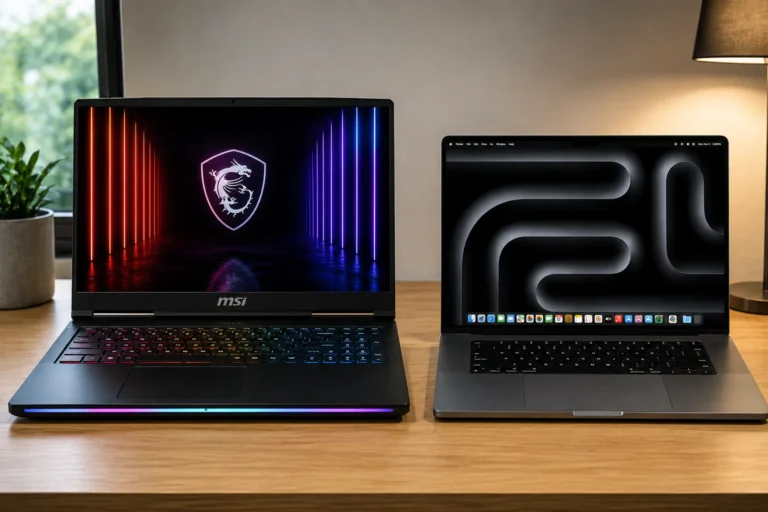
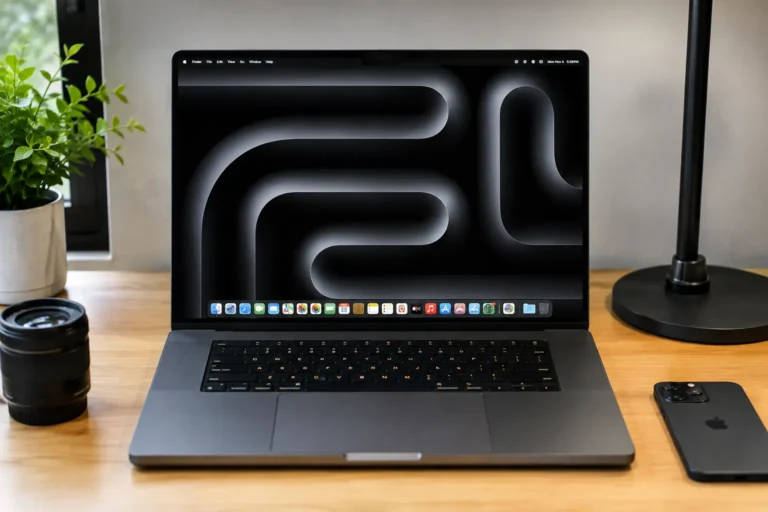
- The Upgrade Choice (Elite Tier Laptop): MacBook Pro M4 Max. For creative professionals looking to move into an elite unibody frame that can deliver massive multi-core processing speeds, silent thermals, and matching performance while disconnected from a wall charger.
- The Value Choice (Value Tier Laptop): ASUS TUF Gaming Laptop. If you prioritize maximum raw graphics performance and cooling headroom over thin metal frames and want a high-value system under $1,000.
Technosyne – Beyond Tech. Into the future of happy living.
Thank you for spending your time with Technosyne! Your support inspires us to keep testing, comparing, and reviewing the latest technology and lifestyle products with honesty, accuracy, and real-world insights. Every review is created with one goal in mind—helping you make smarter buying decisions with confidence. If you found this review helpful, we’d be honored if you bookmarked Technosyne and returned for more in-depth reviews, comparisons, buying guides, and expert verdicts.
Until next time, See you in the next Technosyne Verdict.!