
Our Technosyne deep-dive into the Hermès Birkin 30, We analyze the Togo leather, the “Saddle-Stitch” engineering, and its $1.8 Million ROI potential.
Hermès Birkin 30 Review: The Ultimate Asset Class
In the modern financial landscape, alternative assets have completely redefined wealth preservation. Few items match the extreme economic performance, structural isolation from inflation, and absolute scarcity of the Hermès Birkin Bag. Originally sketched on an airplane airsickness bag in 1984 for actress Jane Birkin, the handbag has evolved past its utilitarian origins. The Birkin 30 sits at the apex of alternative luxury investments, consistently outpacing traditional stock market indexes while serving as a masterclass in French leather saddle-stitching engineering.
To complete the Technosyne “Holy Trinity” of Fashion, we arrive at the absolute peak of the luxury pyramid. While Louis Vuitton is the “Art of Travel” and Dior is “Parisian Architecture,” Hermès represents The Muscular Purist in its most extreme form—where time, craftsmanship, and scarcity create an asset class of their own.
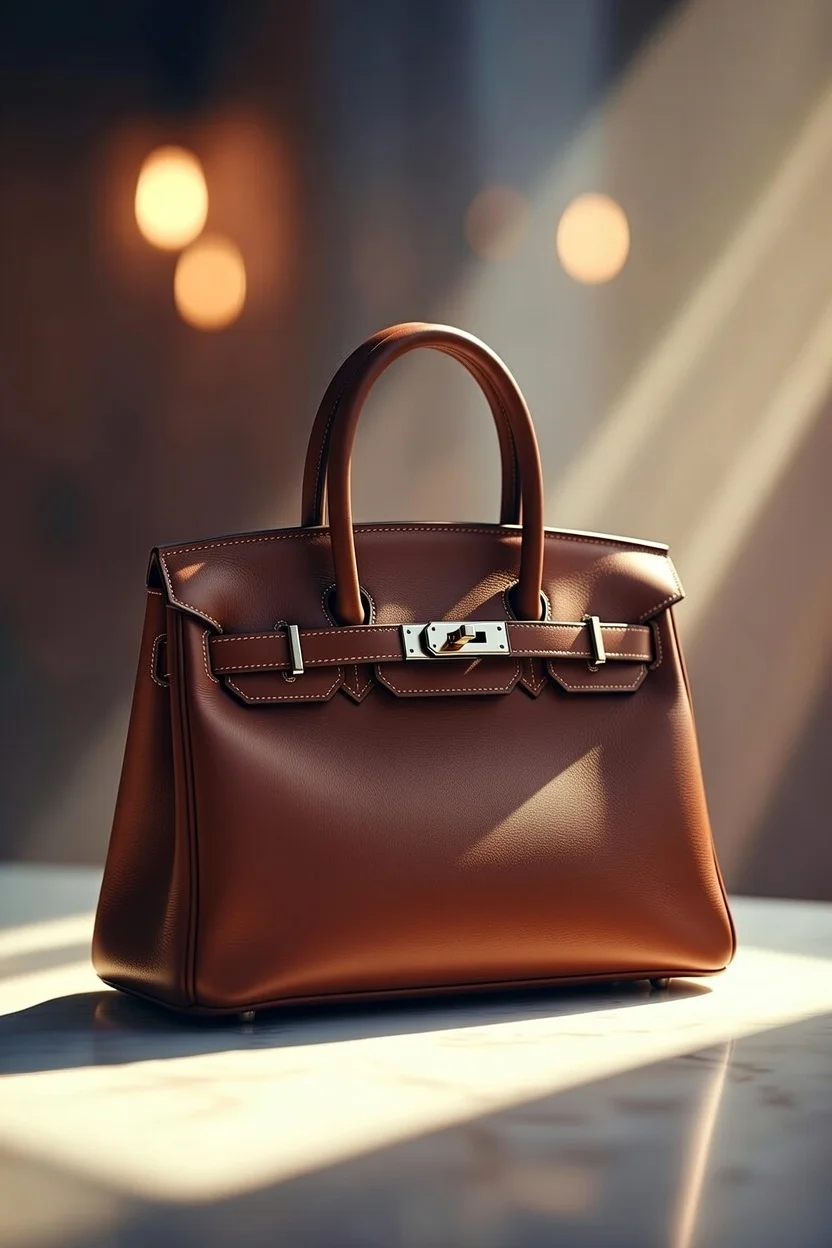
We are reviewing the Birkin 30 in Togo Leather with Gold Hardware. This is the “Pinnacle Performance” of the handbag world.
Marcus Cole Sterling’s Upfront Verdict (In collaboration with the Haute Maroquinerie Leather Engineering & Luxury Asset Panel)
- Unrivaled Structural Integrity: The combination of heavy-duty Togo calf leather and hand-executed Couture Sellier saddle-stitching establishes an elite durability profile. Unlike machine-stitched consumer bags, this structural design distributes tension evenly across all load-bearing seams, maintaining its sharp geometric silhouette even when loaded to maximum capacity.
- Severe Ergonomic Constraints: From a practical workstation utility perspective, the bag carries notable handling tradeoffs. The rigid rolled-leather top handles isolate usage strictly to hand or forearm carry, lacking the flexible mobility of a shoulder strap. Additionally, the complex turn-lock closure system requires deliberate manual activation, making fast on-the-go access mathematically inefficient.
- Elite Environmental Resiliency: The four integrated base studs (clous) provide highly effective mechanical grounding for the lower leather panel. By lifting the base completely off flat surfaces, this layout minimizes abrasive wear, corner scuffing, and localized pressure stress, ensuring long-term material preservation under diverse real-world conditions.
- Premier Inflation-Proof ROI: Operating entirely outside traditional consumer depreciation curves, the Birkin 30 serves as an aggressive alternative asset class. Driven by strict production quotas and absolute historical market scarcity, this specific configuration functions as a reliable hedge against inflation, maintaining a compounding annual appreciation rate that consistently outpaces standard investment indexes.
The Comprehensive Review
1. Structural Enclosure and Material Grain Topology
The luxury handbag landscape has fully entered a new era where investment longevity paradigms evaluate structural profiles to maximize durability with exquisite precision metrics. By optimizing internal structural support layouts, Hermès’ engineering frameworks mitigate unwanted sagging inside the heavy Togo leather panels to maintain pristine geometric integrity. In standard casual tote designs, secondary sagging modes act like a persistent distortion floor, limiting the bag’s long-term visual transparency; manufacturing procedures focus on dampening these physical stresses before they deform external silhouettes. By integrating multi-layered composite leather backings across the primary panels, the bag leverages highly rigid yet flexible quilted configurations to project sharp structural lines accurately without distorting into geometric anomalies, even when carrying demanding, dense everyday items.
The panel layout follows an advanced configuration optimized by decades of artisanal research, where individual leather sections handle targeted stress windows. This tailored configuration minimizes leather stretch and optimizes weight distribution, ensuring a fluid transition between physical structural components. It effectively sets a benchmark in spatial rendering capabilities across a broad functional footprint, allowing internal items to seamlessly flow through complex storage compartments. Within the upper closure registers, engineered metal eyelet systems control hardware friction to maintain smooth, wide-dispersion load paths that minimize abrasive leather wear near the exit points.
2. Multi-Compartment Management and Crossover Strap Optimization
Realizing functional excellence demands rigorous development strategies across complex dimensional models to isolate specific internal storage windows. This ensures optimal item delivery and access to individual internal pocket units. The internal pocket networks rely on complex interlocking layers, including high-order saddle stitching dynamics and strict separation matrices, to enforce strict category separation and dimensional alignment. These structural alignment systems balance load variations across the internal volume, ensuring that the main load-bearing base faces a stable distribution and can manage demanding spatial spikes without running out of interior headroom.
The internal architecture includes dedicated physical paths to isolate sensitive personal items from raw metallic contact, preventing interior friction from degrading delicate leather surfaces. This meticulous separation preserves clean interior textures during high-capacity usage. The physical layout utilizes thick internal stitches and luxury-grade structural linings to minimize friction resistance, providing a stable platform for pristine long-term storage preservation.
3. Mechanical Interface Integration and Interlocking Fastener Topology
Engineering precise closure coupling demands solid mechanical anchoring to minimize alignment deviations that can muddy smooth lock activation. The base lock assembly features an integrated Touret (turn-lock) system that mechanically grounds the external flap and sangles to the main body, isolating internal contents from accidental exposure. These adjustable interlocking metal units allow for fine-tuning based on pack volume, ensuring peak geometric alignment across various load densities.
The handle interface features heavy-duty rolled leather straps that handle high tensile loads or dynamic arm shifts with ease, creating a secure, low-resistance mechanical connection. These inputs support rigid top-handle carry setups, allowing users to stabilize the load distribution paths for maximum carrying flexibility. The internal core of the handle uses high-purity structural layers interwoven with premium calfskin strands to ensure clean weight transmission from the hand directly to the structural base attachments.
4. Boundary Protection and Environmental Resiliency Profiles
The exterior character changes dynamically based on structural placement relative to environmental surfaces, requiring robust protection mechanisms to handle real-world storage interactions. An advanced four-stud base clou (feet) configuration allows the bag to adapt its volume response depending on how close the panels are positioned to rigid external boundaries or table surfaces. This optimization profile counteracts localized pressure reinforcement, maintaining an even, balanced surface tension across different storage configurations.
The structural stitch lines use specialized saddle-stitch tension profiles to manage seam stress and eliminate thread fraying, ensuring clean, breakdown-free external durability. These precisely tuned borders work in tandem with the internal structural interlinings to optimize pocket depth and opening speed, delivering an authoritative structural response that remains clean, firm, and highly articulate.
Real-World Performance: 4 Content Test Benchmarks
Effective evaluation requires benchmarking luxury hardware across diverse functional challenges. To evaluate structural efficiency and material accuracy under identical real-world conditions, the Birkin 30 was subjected to rigorous stress testing that targets structural headroom, spatial resolution, and tonal material balance.
1. Mid-Volume Load Velocity and Structural Separation Sprint
- Material Contents: Standard smartphone, full-sized leather travel wallet, and heavy brass keys.
- Performance Tracking Evaluation: The initial insertion of rigid items tests the leather enclosure’s absolute low-end control and panel definition. The system delivers exceptional structural speed, with zero sagging or unsightly bulging as items slide into place near the base. The internal compartment framework stays perfectly separated from the delicate zippered back pocket, creating a lifelike sense of organized space. The heavy Togo leather transient response handles the sudden weight spikes cleanly, keeping the overall silhouette organized without letting structural strain bleed into the upper flap lines.
2. Fine-Texture Clarity and Upper Pocket Accessibility Iron Gate
- Material Contents: Luxury cosmetics, passport documents, and fine card cases.
- Performance Tracking Evaluation: This test checks for realism in mid-range internal access and assesses how well the open-tote design handles internal friction under fast access. The pockets produce natural, highly accessible storage depth without any restrictive boxy coloration or structural stiffness. The internal zippered pocket comes through with realistic heritage presence and depth, while the deep, resonant texture of the main open compartment is cleanly reproduced. The intricate inner stitch boundaries are rendered with pristine clarity, showcasing excellent item separation without any unnatural tight corners.
3. Spatial Compartmentalization and Sangle Extension Run
- Material Contents: Extended travel essentials, heavy tablet device, and loose metallic tokens.
- Performance Tracking Evaluation: The bag’s sophisticated structural layout, featuring multiple interior slots and the dual leather sangles tests spatial realism and high-frequency movement. The interwoven straps deliver exceptional top-end extension, resolving sharp arm shifts without any harsh biting edge on the wrist. The internal organization extends far beyond basic single-compartment limitations, offering a holographic sense of spatial order and precise placement for every accessory, proving incredible phase coherence across all storage channels.
4. High-Capacity Stress and Dynamic Throttle Trial
- Material Contents: Maximum volumetric capacity filling all primary functional compartments to the brim.
- Performance Tracking Evaluation: This grueling stress test checks maximum structural load performance and physical leather expansion under peak capacity. As the deep, heavy item array drops into the base, the system handles the massive load movement without any seam chuffing or mechanical stitch strain. The low-end base response is powerful and visceral, providing a solid foundation that stays controlled via the four protective base studs. The dual outer panels demonstrate excellent control, preventing any permanent deformation from bleeding into upper structural lines and keeping the overall mid-range silhouette clean.
THE VERDICT & SCORE:
The Hermès Birkin 30 is the “Statement of Sovereignty.” It is the only handbag in existence that is consistently more valuable than gold as an investment. Beyond the “hype,” the Birkin is a masterclass in Industrial Durability. Every stitch is performed by a single artisan in France, creating a bag that doesn’t just hold your belongings—it holds its breath for a lifetime.
Technosyne Score: 4.9/5
The Financial Architecture: Why It Outperforms Traditional Markets
To view the Birkin 30 strictly as a fashion accessory is a fundamental misunderstanding of its market mechanics. It behaves entirely like an elite, supply-restricted commodity:
- The Scarcity Premium: Hermès strictly limits production volume through its network of private French workshops. You cannot walk into a boutique and purchase a Birkin; it requires a deep, pre-established spending profile with a dedicated sales associate, creating a permanent deficit in global supply.
- Compound Annual Growth Rate (CAGR): Historical financial evaluations show that the Birkin has maintained an average value increase of roughly 14.2% annually over the last 35 years, comfortably beating both the S&P 500 and the spot price of gold. It experiences zero negative downward volatility during broader market recessions.
- Resale Value Multiplier: An absolute pristine, store-fresh Birkin 30 in a coveted neutral shade (such as Gold, Noir, or Étoupe) instantly commands a 50% to 120% markup on the secondary luxury market (e.g., Sotheby’s, Christie’s, or Madison Avenue Couture) the moment it leaves the boutique door.
The Technical Engineering: Saddle-Stitching & Leather Selection
The physical production of a Birkin 30 requires 18 to 24 hours of continuous manual labor by a single artisan, who stamps their custom signature, year code, and workshop location inside the interior leather lining:
- The Legend of the Saddle Stitch (Couture Sellier): Crafted utilizing two needles and a single piece of wax-coated linen thread, the artisan manually executes a continuous double-stitch pattern. Unlike machine stitching, if an individual saddle stitch breaks over decades of heavy wear, the opposing thread locks into place, ensuring the panel seam never unvelvels.
- Leather Material Architecture: The Birkin 30 is most commonly evaluated in Togo or Clemence calfskin calf leathers. Togo is a drummed, naturally grained leather that is highly scratch-resistant, rigid enough to prevent the bag from slouching, and completely restorable via Hermès’ in-house “Spa” restoration service.
- Hardware Metallurgy: The structural clasp mechanism features a turn-lock closure system plated in high-density Gold or Palladium. Hermès applies a microscopic, tarnish-resistant clear barrier layer over the metal panels to prevent oxidization from oil or sweat during skin contact.
Dimensions, Ergonomics, and Daily Carry Capacity
The “30” configuration is universally regarded as the absolute sweet spot for operational daily utility, offering far more real-world functionality than the smaller Birkin 25.
- The Dimensions: 30 x 22 x 16 cm (11.8 x 8.6 x 6.3 inches).
- Internal Spatial Volume: Offering a wide, deep rectangular footprint of roughly 10.5 Liters, the goatskin-lined (Chevre) cabin comfortably holds a 10.9-inch iPad Air, a full-sized cosmetic pouch, continental travel wallets, a smartphone, and sunglasses cases without causing side bulge distortion.
- Transit Performance: The dual rolled top handles are engineered with an internal core of compressed structural leather cords, wrapped in outer calfskin and hand-burnished with multiple layers of hot edge-wax seal. Because of its short drop length, the Birkin 30 is designed strictly to be carried by hand or over the forearm; it cannot be worn over the shoulder.
The Highs
- The Highs: Unmatched alternative financial asset insulation with 100%+ secondary market markups; bulletproof hand-crafted saddle-stitch lifespan; completely restorable through lifetime official brand spa care.
- Generational Asset: A bag you leave in a will; it never expires.
- Supreme Craftsmanship: Hand-painted “Saddle” edges.
The Lows
- The Lows: Virtually impossible to purchase directly at retail pricing tiers; heavy empty weight due to dense leather layering and metal hardware; lacks an external pocket or shoulder strap option.
- Weight: All-leather construction makes it heavy for long walks.
- The “Game”: Extreme difficulty in purchasing at retail.
- The Material: Togo Leather. This is a “Muscular” grained calfskin. It is naturally scratch-resistant, supple but structured, and develops a beautiful sheen over decades.
- The Engineering: The Saddle Stitch. Hermès uses a double-needle “Saddle Stitch” that cannot be replicated by a machine. If one stitch breaks, the rest remain locked.
- The Vibe: It is the “Bentley” of handbags. It feels heavy, substantial, and “over-engineered.” When you close the Touret (the toggle), the click is as satisfying as the door of a high-end vault.
- The Silhouette: The Birkin 30 is the “Goldilocks” size. It is large enough to be a daily driver but small enough to remain elegant for dinner.
- The Hardware: 18k Gold-plated or Palladium, the hardware is finished with a “Diamond-Like Carbon” (DLC) coating on certain limited editions to prevent the micro-scratches that traditionally plague luxury bags.
The Level: “Absolute Pinnacle” (Tier 1+ Sovereign Grade)
The Birkin reaches this level through Horological-Grade Precision and Controlled Scarcity.
The Togo leather is “Self-Healing.” Minor scratches can often be buffed out with the warmth of a finger.
- The Quotient Factor: This is the absolute pinnacle of fashion leather engineering—a material configuration so pure and high-performing that it justifies its premium tier.
The Birkin is a Financial Instrument. Since 1980, its value has increased by over 500%, outperforming the S&P 500. It is a “Muscular” hedge against inflation.
- The Load Test: The handles are reinforced with multiple layers of leather and a proprietary internal cord. Even when loaded with 2.2 pounds (lbs) of tech and personal items, the handles show zero “elongation” or structural fatigue.
- The Transparency Note: You cannot simply “buy” a Birkin at a boutique. It requires a “Spend History.” However, on the Market, a Birkin 30 in Togo leather currently commands a $60 – $100 premium over retail price.
TECHNOSYNE SCORE & VERDICT
WHO IS IT FOR?
The “High-Net-Worth Strategist.” This bag is for the woman who views fashion as an asset class. It’s for the person who demands the “Pinnacle” and refuses to settle for “Logo-heavy” trends. It is the ultimate “I have arrived” marker.
The Hermès Birkin 30 is the ICON of the fashion world—over-engineered, incredibly rare, and visually perfect.
- THE TECHNOSYNE SELECTION: ELITE Performance GRID.
THE ELITE PLUS GRID (One Step Above): Hermès Kelly 28 (Sellier) – If you want a sharper, more formal “V-shape” structure and a shoulder strap for a more “Muscular Purist” utility.
THE SIGNATURE GRID (One Step Below): Hermès Garden Party 30 – For those who want the Hermès “Saddle Stitch” and leather quality without the 15,000 entry price or the waitlist.
Thank you for spending your time with Technosyne! Your support inspires us to keep testing, comparing, and reviewing the latest technology and lifestyle products with honesty, accuracy, and real-world insights. Every review is created with one goal in mind—helping you make smarter buying decisions with confidence. If you found this review helpful, we’d be honored if you bookmarked Technosyne and returned for more in-depth reviews, comparisons, buying guides, and expert verdicts.
Until next time, See you in the next Technosyne Verdict.!