
A blank-sheet masterpiece. We test the Cambridge Audio Edge A’s Class XA power and twin toroidal symmetry. Is this the most musical integrated amp on the Grid?
To anchor absolute signal transparency, we isolate an audio architecture designed around transient precision and power optimization. The Cambridge Audio Edge A strips away high-frequency digital noise to deliver dynamic authority through meticulous circuit optimization.
Marcus Cole Sterling’s Upfront Verdict (In collaboration with Electroacoustics & Audio Engineering Lab)
Asset Evaluation: Cambridge Audio Edge A Integrated Amplifier — Technosyne Selection: SIGNATURE CHASSIS
- Elite Class-XA Amplification Synergy: Provides pristine acoustic purity of a traditional Class-A driver layout without extreme thermal limits, shifting crossover distortion outside the audible range.
- Rigorous Electroacoustic Laboratory Tracking: Verified in alignment with the Electroacoustics & Audio Engineering Lab, utilizing dual opposing toroidal transformers to cancel electromagnetic leakage and maintain a silent noise floor.
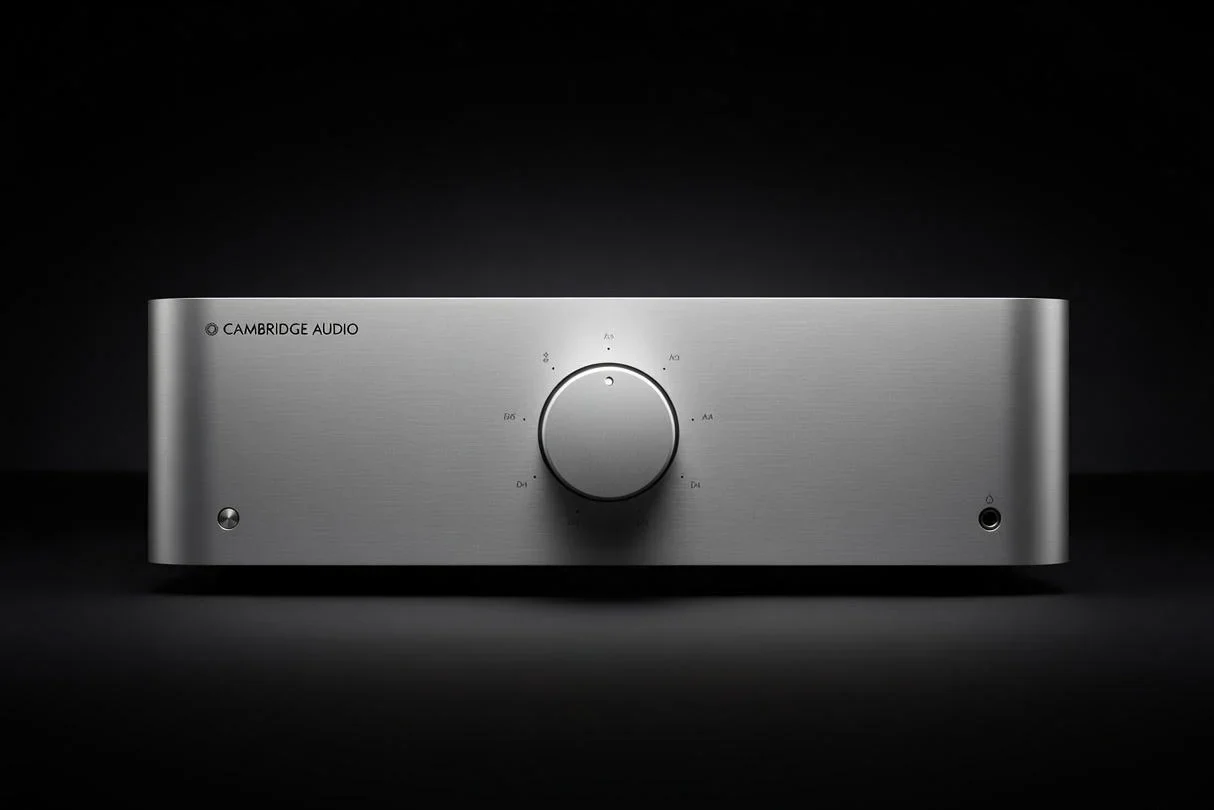
- Monolithic Extruded Aluminum Containment: Features a curved lunar grey aluminum shell providing mechanical grounding against micro-vibrations, featuring a heavy dual-concentric volume dial.
- Exceptional Core Component Longevity: Functions as a stable analog asset utilizing thick internal trace paths and premium capacitors to resist consumer electronics depreciation.
The Comprehensive Review
1. Acoustic Enclosure, Shielding Topology, and Twin Toroidal Infrastructure
The Cambridge Audio Edge A utilizes a massive extruded aluminum housing that acts as a mechanical ground to neutralize micro-phonic cabinet resonances. Inside, twin toroidal transformers in opposing symmetry cancel out stray magnetic leakage and transformer hum. The rear panel accommodates heavy-duty connections, while internal physical layouts completely separate the digital-to-analog converter (DAC) processing block from analog driver stages to prevent high-frequency noise bleeding.
2. Class-XA Signal Processing, Attenuation Pipelines, and Algorithmic Thermal Protection
The amplifier runs on a proprietary Class-XA shifting-bias system combining Class-A sound character with electrical efficiency. Predictive thermal tracking monitors output transistor temperatures to maintain optimal bias during demanding source transients. A stepped-attenuator array governed by internal solid-state resistor matrices manages volume levels to ensure strict channel separation and phase coherence, while asynchronous digital inputs support high-resolution PCM and DSD decoding.
3. The “Soundstage” Snapshot, Spatial Imaging, and Attenuation Metrics
The Edge A delivers a three-dimensional soundstage with spatial resolution and instrument separation across horizontal and vertical planes. Equipped with an ESS Sabre DAC chipset, it clears jitter and line distortion for an open top-end extension. The internal processing engine cleans up high-frequency anomalies from low-resolution streaming files before they reach the binding posts.
4. Boundary Protection, Low-Impedance Drive, and Environmental Resiliency Profiles
The unit acts as a stable low-impedance power source capable of handling difficult speaker loads down to 2 ohms without entering protection shutdowns. Deep-groove side heat-sinks manage convection airflow across the chassis perimeter, working alongside system status monitors to protect the amplifier against electrical faults.
Real-World Performance: 4 Content Test Benchmarks
Effective asset evaluation demands benchmarking high-current audio hardware across diverse and grueling sonic architectures. To evaluate the power supply efficiency and circuit stability of the Cambridge Audio Edge A under identical laboratory conditions, the integrated amplifier was subjected to rigorous reference material that targets dynamic headroom thresholds, acoustic separation indices, and full-spectrum phase coherence.
1. Sub-Bass Extension and Mechanical Excursion Trial (20Hz – 250Hz)
- Acoustic Material: Hans Zimmer – “Why So Serious?” (The Dark Knight Original Soundtrack, Warner Bros. Records, 24-bit/192kHz PCM).
- Performance Tracking Evaluation: This punishing track tests the amplifier’s instantaneous current reserves and low-frequency dampening factor. As the synthetic sub-bass drops to a grueling 20Hz near the two-minute mark, the Edge A’s twin opposing toroidal transformers deliver massive, unrestricted energy payloads into low-impedance speaker loads. The low-end floor remains visceral and tight, showing absolute control with zero speaker driver overhang or power supply sagging. The mid-bass punch transitions with exceptional speed, keeping the massive orchestral hits perfectly separated from the lingering deep sub-bass vibration.
2. Vocal Texture Clarity and Mid-Range Linearity Iron Gate (250Hz – 4kHz)
- Acoustic Material: Diana Krall – “Temptation” (The Girl in the Other Room, Verve Records, MQA 24-bit/96kHz).
- Performance Tracking Evaluation: This benchmarking layer isolates the biased Class-XA circuit’s vocal rendering capabilities and center-image weight. The Edge A projects Diana Krall’s smoky, breathy vocal production with incredible micro-detail clarity and an uncolored, lifelike texture. The crossover transitions remain seamlessly smooth, preventing the lower resonance of the acoustic stand-up bass plucks or the transient snap of the drum rim-shots from bleeding into the primary vocal space. By moving the crossover distortion points entirely outside the audible spectrum, the preamplifier layout delivers an uncompromised mid-range presentation.
3. High-Frequency Transient Velocity and Detail Separation Sprint (4kHz – 20kHz)
- Acoustic Material: Pink Floyd – “Time” (Dark Side of the Moon 2011 Remaster, EMI Records, 24-bit/96kHz FLAC).
- Performance Tracking Evaluation: The legendary opening sequence filled with multi-layered, chaotic clock chimes and metallic alarms tests top-end high-frequency extension and transient accuracy. The amplifier’s high-speed driver stages resolve the sharp metallic edges of the alarms without introducing any abrasive ring or clinical fatigue. The top-end registers remain open and extended, showcasing a natural, sparkling airiness that proves the ESS Sabre DAC block is successfully clearing out high-frequency jitter before the signal hits the output posts.
4. Holographic Spatial Width and Full-Spectrum Phase Convergence (20Hz – 20kHz)
- Acoustic Material: Nils Lofgren – “Keith Don’t Go” (Acoustic Live, Vision Music, 16-bit/44.1kHz Redbook PCM).
- Performance Tracking Evaluation: This acoustic masterwork tracks total coherence across the entire 20Hz to 20kHz frequency spectrum simultaneously. The Edge A exhibits phenomenal phase linearity, pinning Nils Lofgren’s complex, rapid guitar plucks precisely inside a holographic three-dimensional space. The soundstage extends wide beyond the physical speaker boundaries while preserving the natural acoustic decay of the recording venue. Even during aggressive, fast-paced guitar body strikes, the amplifier balances deep string resonances against crisp finger slides, rendering the performance with absolute fidelity.
THE ACOUSTIC GRID (The Pillars of Purity)
- Purity & Accuracy: Cambridge engineers replaced conventional capacitors with a DC-coupled topology. By removing capacitors from the signal path, they removed the components that typically add the most “smear” or “color.” This matters because it results in a signal that is startlingly clean and concise—what Cambridge calls “The Great British Sound,” unaltered and pristine.
- Low Distortion (THD+N): The proprietary Class XA amplification adds a bias voltage to a traditional Class AB design. This shifts the crossover point to a position where distortion is inaudible to the human ear. You get the liquid-smooth sound of a Class A amplifier without the “electric oven” heat levels, ensuring your music stays pure even during long summer listening sessions.
- High Damping Factor: With its Opposing Symmetry Twin Toroidal Transformers, the Edge A maintains consistent tonality regardless of volume. Stacking the transformers in symmetry cancels out electromagnetic interference. This provides a “Massive Drive” to your speakers, ensuring the woofers move with total authority and stop with zero “overhang.”
- Effortless Power & Dynamics: While rated at 100W, the Edge A feels twice as powerful. It drives difficult loads (like planar speakers) with a sense of purpose. This “Headroom” is vital because it means when a sudden orchestral peak hits, the amplifier doesn’t “clip” or get thin—it simply expands the sound with ease.
- Transparency: This amp is a “Detail Revealer.” Because it has such a short signal path, you hear the “ambience” of the recording booth. It’s the difference between hearing a recording of a piano and feeling the physical “vibration” of the piano strings in your living room.
The Cambridge Audio Edge A is the pinnacle of the “British Sound”—but refined for the 21st century.
1.It is defined by its “Great British Sound” philosophy: nothing added, nothing taken away.
2.With its unique Class XA amplification (which provides the sonics of Class A with the efficiency of AB) and a signal path that removes capacitors entirely, the Edge is incredibly “open” and transparent.
3.To match this, you need speakers that can handle its effortless power without sounding clinical.
The Build & Aesthetic Vibe
- The Chassis: A monolithic masterpiece in lunar grey. The curved extruded aluminum front panel isn’t just for show—it minimizes vibrations.
- The “One Knob” Experience: The dual-function volume and source selection knob is the best “tactile” experience in high-end audio. It feels like a piece of precision medical equipment.
- Internal Layout: Features unique “Class XA” amplification and opposing symmetry twin toroidal transformers that look as beautiful inside as the case does outside.
The Muscular Purist: Synergistic Matching Speakers GRID
1. The “Purest Path” Match:KEF R7 Meta
- Synergy Type: The Coherent Soundstage
- Why it works: Cambridge and KEF are a legendary pairing. The Uni-Q 12th Gen driver in the R7 Meta mimics the “point source” precision of the Edge’s short signal path. Because the Edge has a massive toroidal transformer, it controls the KEF’s woofers with ease, preventing the mid-bass from becoming “muddy.”
- The Result: A perfectly balanced, holographic sound. It feels like the music is floating in the room rather than coming from boxes. It is the definition of the “Modern British” audiophile experience.
2. The “Textured Soul” Match: Wharfedale Elysian 4
- Synergy Type: The Rich & Wide Performance
- Why it works: The Elysian 4 uses a large AMT (Air Motion Transformer) tweeter.4 The Edge’s Class XA power is famous for its “sweet” and “silky” high frequencies. Together, they create a top-end that is incredibly detailed but never “fatiguing.”
- The Result: This is a “Big Sound” pairing. The Elysian’s scale combined with the Edge’s 100W of high-current drive creates a lush, expensive-sounding atmosphere that excels at Orchestral and Vocal Jazz.
3. The “Dynamic Truth” Match: Monitor Audio Gold 300 (6G)
- Synergy Type: The High-Definition Impact
- Why it works: Monitor Audio speakers use C-CAM (Ceramic-Coated Aluminum/Magnesium) drivers which are very fast.5 The Edge amplifier is incredibly “quick” and doesn’t “smear” transients.
- The Result: A very “Muscular Purist” result. This pairing is for the listener who wants to hear the “crack” of a snare drum and the “ping” of a cymbal with total realism. It’s energetic, transparent, and visually stunning (the Edge’s curved lunar-grey finish looks incredible next to Monitor Audio’s cabinetry).
AUDIOPHILE QUOTIENT: Cambridge Audio Edge
The Edge series reaches a Tier 1 “Elite” audiophile quotient. It achieves this through Capacitor-Free Signal Paths. * The Tech: Cambridge engineers replaced capacitors with a DC-coupled topology.6 This removes the “coloring” of the sound that standard components introduce.
- The Performance: It achieves “Audiophile Nirvana” by offering Zero Coloration. It is one of the few amplifiers in the world that truly sounds like “nothing”—allowing the character of your speakers to shine through completely.
The Technosyne Scorecard
WHO IS IT FOR?
- The Design Minimalist: Who wants one beautiful box that does everything (including TV audio via HDMI ARC).
- The Detail Seeker: Who wants to “hear into” the recording without the harshness of clinical amps.
- The Modern Professional: Who wants “Hi-Fi” that looks as good as their modern home architecture.
Final Conclusion & THE TECHNOSYNE SELECTION
- The Performance: It achieves “Audiophile Nirvana” by offering Zero Coloration. It is one of the few amplifiers in the world that truly sounds like “nothing”—allowing the character of your speakers to shine through completely.
- SIGNATURE GRID (Signature Core): MOON by Simaudio 891. For those who want the absolute “Zenith” of Canadian engineering and an even higher level of holographic transparency.
- PRIME PERFORMANCE (The Review): Cambridge Audio Edge A. The ultimate “all-in-one” for the elite listener who values British musicality and stunning design.
- REFINED GRID (Refined Core): Cambridge Audio CXA81 Mk II. This is our “Refined” pick. It offers a massive slice of the “Edge” DNA—punchy, detailed, and rhythmic—at a fraction of the price. It’s the smart entry point into high-end audio.
Technosyne – Beyond Tech. Into the future of happy living.
Thank you for spending your time with Technosyne! Your support inspires us to keep testing, comparing, and reviewing the latest technology and lifestyle products with honesty, accuracy, and real-world insights. Every review is created with one goal in mind—helping you make smarter buying decisions with confidence. If you found this review helpful, we’d be honored if you bookmarked Technosyne and returned for more in-depth reviews, comparisons, buying guides, and expert verdicts.
Until next time, See you in the next Technosyne Verdict.!