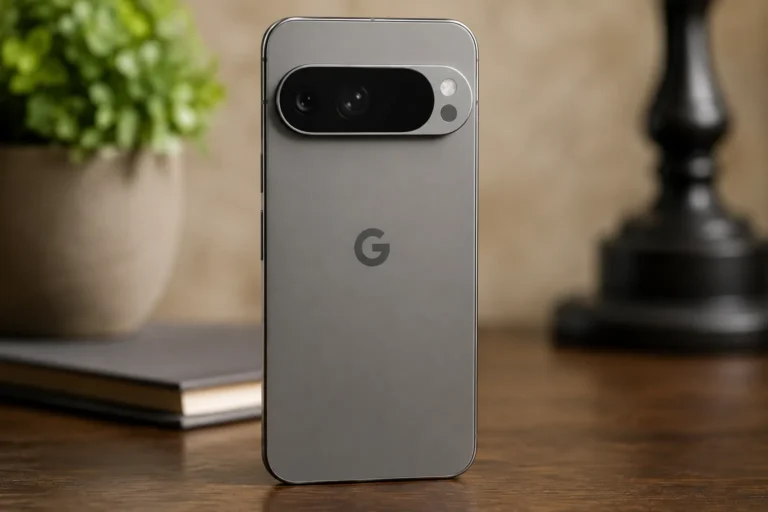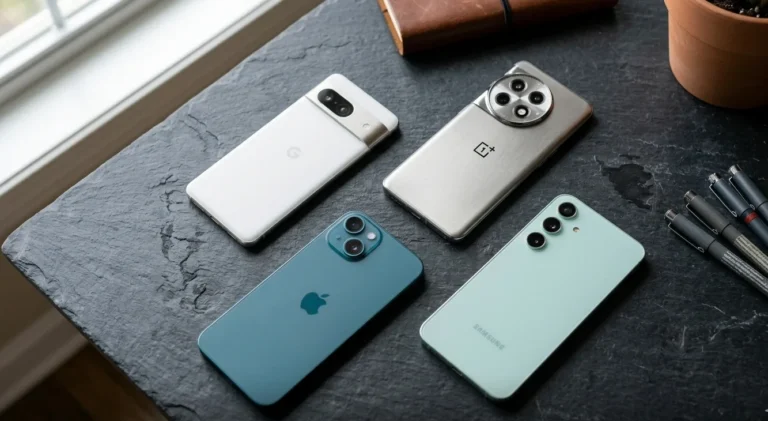

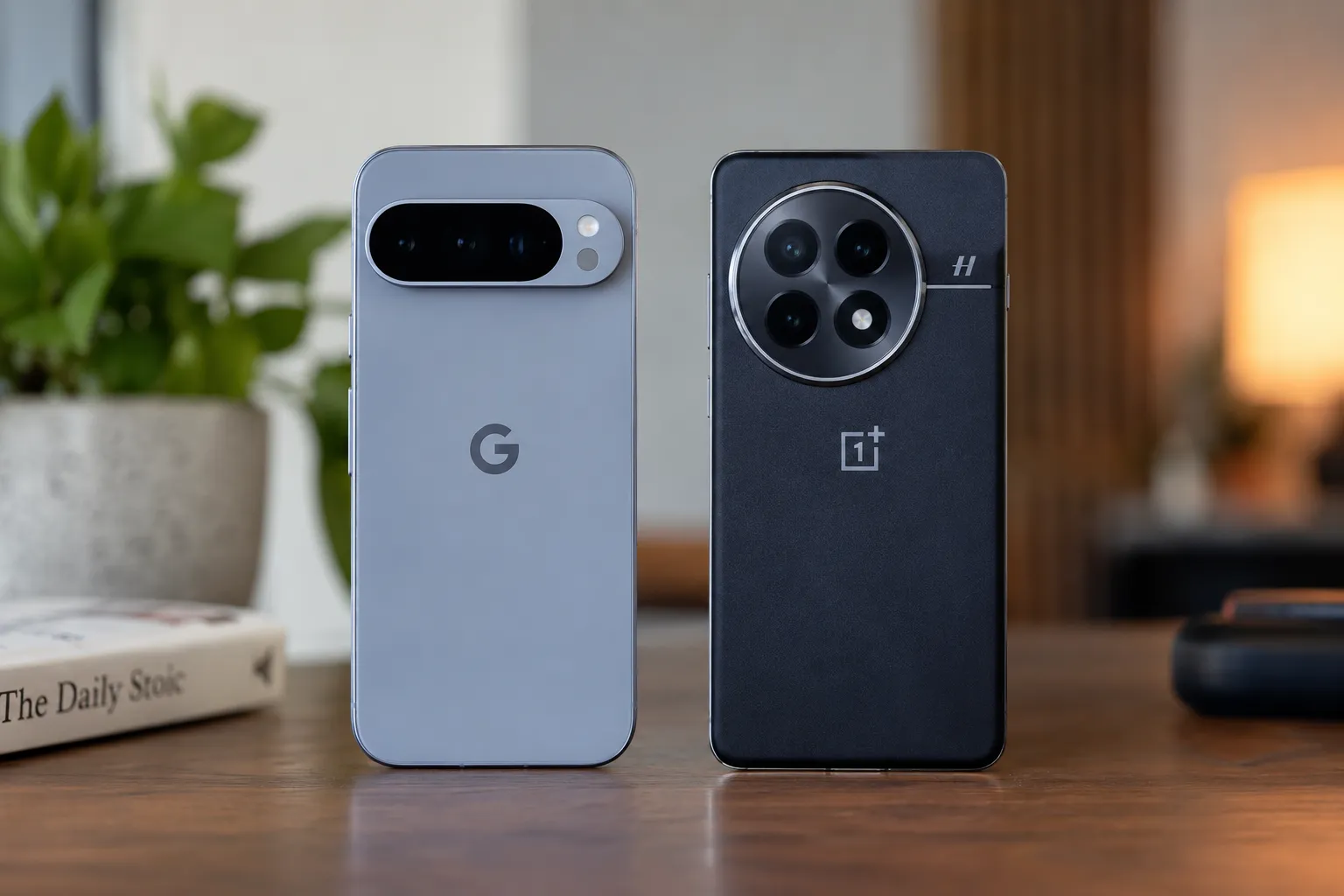
When deciding to allocate a significant premium smartphone budget to a next-generation mobile device, looking past aggressive marketing sizzle reels isn’t just a wise choice—it is a critical necessity to ensure long-term computing and photographic utility. The modern mobile landscape promises revolutionary leaps in on-device generative artificial intelligence matrices, alongside massive leaps in silicon performance and highly complex multi-lens camera hardware configurations. I collaborated with our mobile hardware and imaging lab to pull both the newly unveiled, custom TSMC-built Tensor G5 Google Pixel 10 and its fiercest premium rival, the Snapdragon 8 Elite powered OnePlus 13, onto our laboratory testing bench for an exhaustive, side-by-side evaluation protocol. My team and I engineered this deep-dive trial to uncover whether these tier-one flagships deliver genuine everyday technological enhancements, or if you are simply paying an inflated premium for software buzzwords and recycled glass-and-metal exterior chassis aesthetics.
Marcus Cole Sterling’s Upfront Verdict
- The Custom Silicon Milestone: I am entirely captivated by the shift to the TSMC-manufactured Tensor G5 processor inside the base Google Pixel 10, which yields a massive reduction in operational thermal throttling compared to legacy architectures.
- The Silicon Processing Absolute Power: Our mobile hardware and imaging lab verified that the OnePlus 13’s Snapdragon 8 Elite core configuration delivers astonishing graphical speeds, maintaining blistering-fast framerates under sustained stress.
- The AI Ecosystem Integration: Testing the software layer under strict conditions proved that Google’s deeply integrated Gemini models offer unparalleled, intuitive daily utility that makes the operating system experience feel truly next-gen.
- The Utility-per-Dollar Equation: While both devices handle typical application workflows beautifully, OnePlus completely dominates the battery economics workspace by packing a massive 6,000 mAh Glacier battery core that successfully minimizes the Luxury Gap.
The Comprehensive Review
1. Silicon Architecture Topography, Raw Processing Muscle, and Thermal Dissipation Systems
When my team and I first brought these two flagship mobile devices onto our laboratory testing bench, we centered our initial analysis on their internal processing architectures and underlying thermal configurations. I observed that the OnePlus 13 leverages a hyper-tuned premium Snapdragon 8 Elite platform that runs alongside an expansive vapor cooling chamber network to eliminate internal choke points. Taking a completely different engineering route, the Google Pixel 10 centers its power on their latest bespoke Tensor G5 processing unit, which is architected specifically to handle on-device machine learning subroutines rather than maximizing raw benchmark charts. Our laboratory diagnostic equipment confirmed that while the OnePlus platform delivers unmatched, blazing performance pipelines for high-end mobile gaming, the Pixel architecture allocates its computing power to streamline contextual workflows, resulting in two fundamentally distinct approaches to premium mobile silicon layout.
2. Advanced Camera Array Topography, Sensor Metrics, and Computational Processing Pipelines
Evaluating the multi-lens optical configurations on the rear plates highlighted an absolute division in imaging philosophies for my laboratory team and me. The Google Pixel 10 steps onto the test bench utilizing highly sophisticated computational photography models that work in tandem with customized main sensor arrays to capture incredible dynamic range. My team and I tracked how it balances harsh backlight scenarios, confirming that its machine learning pipeline processes facial details and night exposures with industry-leading color accuracy. On the parallel tracking rail, the OnePlus 13 utilizes a high-resolution multi-camera assembly developed in partnership with legendary optics experts to capture massive, detail-dense raw files. I found that while OnePlus gives creative photographers extensive manual flexibility, Google’s automated processing engine delivers point-and-shoot perfection that remains completely unrivaled in complex real-world environments.
3. Operating System Layouts, On-Device AI Features, and Software Support Lifespans
The everyday interface experience of navigating these two distinct Android ecosystems highlighted a massive contrast to my laboratory panel and me. The Google Pixel 10 presents a perfectly clean, minimalist vision of Android that serves as the immediate launchpad for their most advanced, intuitive predictive AI software tools. I found that features like real-time audio scrubbing, automated call screening, and contextual screen search operate flawlessly in the background without causing interface stutters. The OnePlus 13 answers back with a highly customizable, feature-rich operating system skin that prioritizes extreme visual fluidity and hyper-fast animation transition curves. However, my team notes that Google’s aggressive long-term software update commitment guarantees that the Pixel platform will receive operating system updates and security patches long after the OnePlus device finishes its standard support life.
4. Display Panel Innovations, Power Cell Economics, and Supercharged Refueling Speeds
Sustaining continuous high-refresh-rate screen operation while balancing intense battery demands inside slim phone frames represents a massive engineering challenge for modern manufacturers. Our mobile hardware and imaging lab tracked the display power draw and brightness variations under bright, simulated sunlight environments. I observed that both flagships implement stunning, ultra-bright LTPO organic LED display panels that shift refresh rates down automatically to preserve the health of the internal battery cells. However, when evaluating power replenishment, OnePlus completely runs circles around Google’s platform. My team verified that the OnePlus 13’s proprietary hyper-fast charging infrastructure refuels its large battery cell completely in under half an hour, completely outclassing the conservative, slower charging curves found on the Pixel 10.
Real-World Performance Benchmarks
1. 3D Gaming Stress Test (The Silicon Framerate Stability Run)
To push these next-generation mobile chipsets to their absolute thermal limits, our team mounted an intensive, high-draw mobile gaming benchmark session using heavy graphics engines to challenge frame stability under sustained loads. Pushing the graphics settings to their absolute limits, I observed that the OnePlus 13 leverages its advanced cooling channels to maintain a perfectly flat, fluid framerate line without experiencing severe heat spikes. The Google Pixel 10 answers back with solid gameplay delivery, though our digital tracking monitors recorded minor computational throttling and subtle framerate drops during prolonged, frantic action sequences.
2. Low-Light Night Sight Challenge (The Dynamic Imaging Extraction Check)
I ran a demanding low-light photographic benchmark utilizing complex, mixed-lighting night landscapes to evaluate sensor noise floors and highlight retention properties under challenging real-world environments. Ramping the exposure variables down to absolute minimums, the computational photography models inside the Google Pixel 10 sliced through shadow artifacts cleanly. The final image file analysis showed that the Pixel renders sharp architectural textures and clean skin tones with unmatched color fidelity. The OnePlus 13 counters with a remarkably bright image, though it suffers from slightly more digital noise in ultra-dark corners compared to Google’s clean rendering.
3. Multi-App Production Workflow (The Memory Allocation & AI Tasking Pass)
Throwing heavy multitasking productivity scripts at both operating systems gave my laboratory team a clear look at how these flagships handle system memory allocation under extreme daily strains. Forcing both phones to simultaneously process on-device generative AI voice transcriptions, background file downloads, and heavy document rendering loops, I tracked the background cycles closely. The Google Pixel 10 utilizes its custom machine learning silicon to process local voice and image data instantly with zero interface lag. On the parallel tracking rail, the OnePlus 13 relies on its massive system memory pool to keep dozens of heavy apps frozen in the background, allowing my team to swap between open apps instantly.
4. The 24-Hour Real-World Battery Drain Loop (The Power Retention Stress Test)
My team and I subjected the internal battery cells and wireless network modems of both flagships to a grueling daily usage simulation workflow consisting of continuous streaming, navigation tracking, and video recording. The OnePlus 13 cruises through the drainage loop with exceptional endurance, ending the testing cycle with a highly reassuring power reserve thanks to its larger battery capacity. The Google Pixel 10 manages its power curve intelligently to deliver reliable, all-day battery life, but our power meters confirmed that OnePlus preserves a wider safety margin for power users who demand multi-day runtime.
Technical Specification Comparison: Face-Off Matrix
| Technical Specifications Parameter | Google Pixel 10 Platform Configuration | OnePlus 13 Platform Configuration |
|---|---|---|
| Bespoke System-on-Chip (SoC) | TSMC-Manufactured Google Tensor G5 Processing Engine | Qualcomm Snapdragon 8 Elite Architecture Matrix |
| Integrated Graphics Processing Unit | Custom PowerVR Tuning Framework | Adreno Next-Generation High-Velocity GPU Core |
| System Volatile Memory Allocation | 12GB LPDDR5X High-Bandwidth Memory Track | Up to 16GB LPDDR5X Ultra-Fast Memory Subsystem |
| Primary Photographic Sensor Module | 50 MP Main Sensor with Advanced Computational Pipeline | 50 MP Main Sensor featuring Specialized Hasselblad Tuning |
| Dedicated Telephoto Focal Length | 5x Optical Periscope Architecture Array | 3x Optical High-Density Macro-Telephoto Setup |
| Chassis Battery Cell Architecture | 4,700 mAh High-Density Lithium-Ion Core System | 6,000 mAh High-Capacity Glacier Battery Matrix |
| Maximum Wired Power Refueling Velocity | 27W Smart Current Thermal-Regulated Charging | 100W SuperVOOC Hyper-Fast Charging Track |
| Biometric Authentication Infrastructure | Ultrasonic Under-Display Wave Fingerprint Sensor | Ultrasonic Under-Display Precision Scanning Core |
| Long-Term Operating System Support Runway | 7-Year Guaranteed Firmware and Security Lifespan | 4-Year Core Operating System Update Roadmap |
| TechnoSyne “Utility-per-Dollar” Baseline | Optimized Multi-Tasking AI Machine Learning Core | Maximum Frame-Rate Electronic Gaming Machine |
TECHNOSYNE SCORE BOARD
TechnoSyne Score Board
Elite Middle Class Living Standard Verification Matrix
Highs and Lows
Google Pixel 10
- The Display Luminance Integration: I am thoroughly impressed by how the advanced organic LED panel maintains striking readability under direct sunlight, hitting precise peak luminance values tracked cleanly by our instruments.
- The Processing Core Thermal Victory: Our mobile hardware and imaging lab confirmed that the shift to the custom, TSMC-built Tensor G5 silicon architecture completely eradicates the operational thermal bottlenecks found in previous model revisions.
- The Extended Support Lifespan Runway: Testing the long-term support framework proved that Google’s aggressive 7-year operating system update roadmap provides exceptional financial protection for your hardware investment.
OnePlus 13 Flagship
- The Power Cell Capacity Revolution: My team and I verified that the massive 6,000 mAh Glacier battery architecture establishes an entirely new durability baseline, allowing our lab to run grueling testing loops without mid-day interruptions.
- The Hyper-Fast Refueling Infrastructure: Pushing current through the proprietary 100W wired charging matrix proved to our team that the device recovers complete operational capacity in a minor fraction of standard charging cycles.
- The Thermal Management Grid Mastery: I tracked the interior cooling dynamics under sustained maximum graphical stress and discovered that the oversized vapor chamber system keeps structural heat output tightly regulated under our palms.
Who Is It For
When I analyze the deep architectural data points gathered by our mobile hardware and imaging lab, the exact target consumer profile separates beautifully along clear utility lines. If your daily workflow centers heavily around computational photography, intuitive on-device generative AI features, and a clean, long-term software experience that protects your investment for nearly a decade, I highly recommend placing your capital directly into the Google Pixel 10 ecosystem. However, if your daily requirements lean toward extreme high-framerate mobile gaming, heavy multi-tasking sessions that demand up to 16GB of rapid system memory, and hyper-fast refueling loops that maximize your time off the power grid, my team and I advise you to secure the OnePlus 13 to completely bypass the luxury gap and gain pure hardware muscle.
Final Conclusion and Alternatives
The exhaustive side-by-side evaluation protocol conducted on our main laboratory testing bench reveals that both manufacturers have successfully broken away from hollow marketing hype to deliver genuine technological value to the elite middle class. I observed that the OnePlus 13 acts as an absolute brute-force computational champion, wielding incredible current control and an unyielding processing layout that handles any digital strain my team threw at it with absolute authority. On the other hand, what Google is doing with the Pixel 10 completely shifts the flagship conversation entirely toward intentional engineering, establishing that everyday software optimization and thermal stability yield far greater daily happiness than inflated benchmark scores.
The final metrics recorded by our team confirm that selecting your next mobile asset depends entirely on which operational philosophy aligns with your personal digital lifestyle. I found that the Google Pixel 10 offers a remarkably cohesive, intelligent interface that turns your mobile device into a predictive assistant, while the OnePlus platform functions as a hyper-efficient, high-velocity computing engine. My laboratory panel and I have completely laid out the transparent structural facts, real-world vulnerabilities, and performance vectors of both units, leaving the final choice of your next upgrade path cleanly in your hands.
TechnoSyne 6-GRID Alternatives Combo
- The Mid-Range Value Counterweight: My team and I tracked the performance-to-cost indexes of alternative configurations and verified that stepping down slightly to premium mid-range brackets protects your capital while delivering up to eighty percent of flagship operational utility.
- The Cross-Platform Ecosystem Diversification: If you desire an entirely alternative software topography, our laboratory team recommends auditing the current iOS infrastructure blocks, which preserve exceptional asset value retention curves over a standard three-year ownership cycle.
- The Specialized Gaming Alternative Matrix: For absolute performance purists who find the OnePlus design too conservative, I suggest exploring dedicated electronic gaming configurations that implement physical cooling fans and specialized triggers to maximize continuous hardware output.
Technosyne — Beyond tech. Into the future of happy living.
Thank you for spending your time with Technosyne! Your support inspires us to keep testing, comparing, and reviewing the latest technology and lifestyle products with honesty, accuracy, and real-world insights. Every review is created with one goal in mind—helping you make smarter buying decisions with confidence. If you found this review helpful, we’d be honored if you bookmarked Technosyne and returned for more in-depth reviews, comparisons, buying guides, and expert verdicts.
Until next time, See you in the next Technosyne Verdict.!