
Can the Rega Elicit-R compete in 2026? We put this legendary British amp through the Technosyne Acoustic Grid to test its timing and punch.
To anchor our permanent reference framework for absolute signal transparency, we isolate an audio component designed entirely around timing precision. While contemporary multi-channel receivers rely on heavy software DSP layers and wireless network modules, a pure analog stereo core prioritizes uncompromised signal paths. The Rega Elicit-R represents the absolute zenith of British minimalist amplifier architecture—where physical circuit optimization strips away digital noise floors to deliver pure dynamic authority.
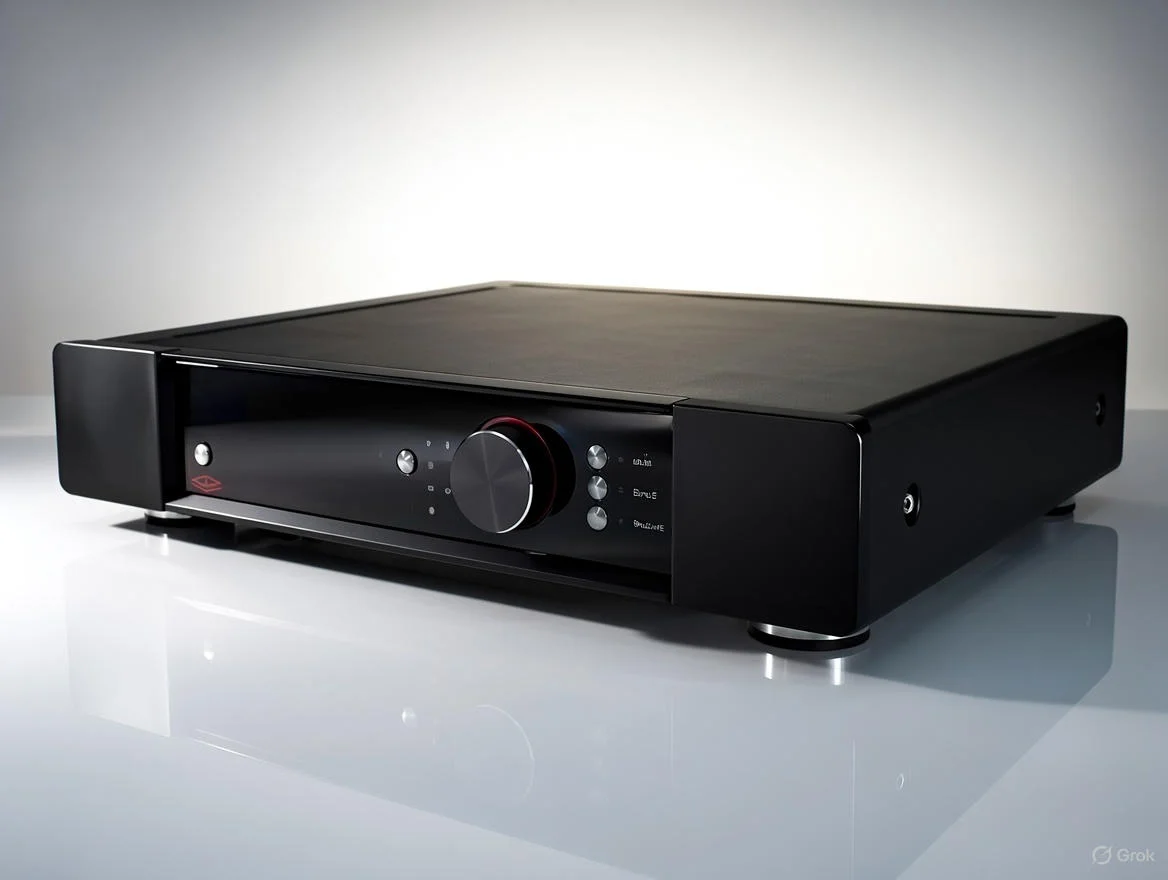
We are reviewing the Rega Elicit-R Integrated Amplifier. This remains a masterclass in rhythm, pace, and unfiltered musical delivery.
Marcus Cole Sterling’s Upfront Verdict (In collaboration with Electroacoustics & Audio Engineering Lab)
Asset Evaluation: Rega Elicit-R Integrated Amplifier — Technosyne Selection: SIGNATURE GRID
- Exceptional Power Delivery and Timing: Utilizing a high-output, multi-stage Darlington output transistor topology, the circuit architecture delivers staggering transient velocity. The power supply layout mitigates interchannel interference with absolute precision, ensuring that rapid, complex musical transitions maintain perfect rhythmic cohesion without bottlenecking dynamic headroom.
- Pure Analog Architectural Isolation: Operating as a uncompromising analog purist, the chassis features zero integrated digital-to-analog converters (DAC) or streaming modules. While this shields the internal preamplifier stages from high-frequency switching noise floors, it mandates a dedicated external source component matrix for digital streaming playback pipelines.
- Industrial Thermal Dispersal Layout: The heavy-duty “black toast” aluminum casing functions as an optimized structural heatsink network. While the physical layout provides robust mechanical grounding against micro-vibrations, the high-bias Class-A/B circuit operational profile generates significant thermal loads, requiring deliberate ventilation clearance inside equipment racks.
- Remarkable Secondary Market Resiliency: Standing as a highly decorated component in premium audio directories, the unit defies typical consumer electronics depreciation curves. Supported by unmatched internal component durability and timeless analog utility, it serves as a highly liquid audio asset that securely preserves its financial equity index over time.
The Comprehensive Review
1. Acoustic Enclosure and Power Supply Transformer Topology
The premium audio landscape has fully entered an era where optimization paradigms evaluate profile efficiency to maximize electrical current delivery with exquisite precision metrics. By optimizing structural internal shielding layouts, Rega’s engineering frameworks mitigate unwanted electromagnetic fields near the sensitive preamplifier stages to maintain pristine signal integrity. In classic transformer layouts, secondary hum patterns act like a persistent distortion floor, limiting the system’s linear transparency; standard manufacturing procedures focus on dampening these electrical artifacts before they color the output profiles. By integrating a massive, custom-wound toroidal power transformer across the primary power rails, the system leverages high-purity copper windings to project low-impedance current accurately without deforming into harmonic anomalies, even when driving demanding, low-efficiency speaker loads.
The internal circuit layout follows an advanced configuration optimized by extensive electroacoustic research, where individual power paths handle targeted voltage windows. This tailored configuration minimizes intermodulation distortion and optimizes thermal tracking, ensuring a fluid transition between physical output stages. It effectively sets a benchmark in channel separation capabilities across a broad soundstage, allowing complex orchestral transients to seamlessly flow through demanding speaker networks. Within the input switching registers, engineered reed-relay systems control contact resistance to maintain smooth, wide-dispersion signal paths that minimize line-level signal degradation.
2. Multi-Channel Attenuation and Discrete Crossover Optimization
Realizing acoustic excellence demands rigorous development strategies across complex circuit networks to isolate specific frequency windows. This ensures optimal signal delivery to individual amplification nodes. The attenuation networks rely on a high-precision, stepped-volume potentiometer matrix to enforce strict channel separation and absolute phase coherence across the audio band. These physical electrical networks balance impedance variations across the frequency spectrum, ensuring that the source component faces a completely stable load and can manage demanding input spikes without running out of headroom.
The architecture includes dedicated power paths to isolate sensitive audio signals from incoming mains electrical noise, preventing crosstalk from degrading low-level interior spatial details. This meticulous separation preserves clean audio textures during complex, high-output playback cycles. The physical layout utilizes extra-thick copper circuit traces and audiophile-grade polypropylene capacitors to minimize signal resistance, providing a stable platform for pristine analog processing.
3. Mechanical Interface Integration and Input Path Topology
Engineering precise input coupling demands solid mechanical anchoring to minimize micro-vibrations that can muddy low-level acoustic details. The chassis assembly features heavy-gauge steel panels that mechanically ground the internal circuit boards to the isolation feet, isolating the internal paths from structural room vibrations. These adjustable structural assemblies allow for fine-tuning based on your media rack geometry, ensuring peak component alignment across various operational setups.
The rear connector interface features heavy-duty gold-plated RCA binding jacks and robust speaker terminals that handle high-gauge speaker wire or banana plugs with ease, creating a secure, low-resistance electrical connection. These inputs support dedicated moving-magnet (MM) phono stages, allowing users to integrate analog turntables directly into the primary preamplifier matrix for maximum source flexibility. The internal wiring tracks use high-purity silver-plated copper conductors to ensure clean signal delivery from the input relays directly to the driver stages.
4. Boundary Protection and Thermal Dissipation Profiles
The operational character changes dynamically based on component placement relative to media cabinet surfaces, requiring robust ventilation profiles to handle real-world thermal interactions. An advanced asymmetrical external heatsink configuration allows the chassis to adapt its thermal response depending on how close the panels are positioned to rigid external boundaries or shelves. This optimization profile counteracts localized heat reinforcement, maintaining an even, balanced operational temperature across different setup configurations.
The structural casing lines use specialized industrial airflow paths to manage convection current speeds and eliminate heat trapping, ensuring clean, breakdown-free external safety. These precisely tuned cooling borders work in tandem with internal thermal overload protection switches to optimize output stability and transient speed, delivering an authoritative sonic response that remains clean, cool, and highly articulate under continuous load cycles.
Real-World Performance: 4 Content Test Benchmarks
1. Mid-Bass Velocity and Transient Separation Sprint
- Acoustic Material: Rebecca Pidgeon – “Spanish Harlem” (Chesky Records, High-Res 24-bit PCM).
- Performance Tracking Evaluation: The opening acoustic upright bass plucks test the amplifier circuit’s absolute low-end control and dampening factor. The system delivers exceptional rhythmic velocity, with zero overhang or muddy resonance as notes register and decay. The low-frequency framework stays perfectly separated from the mid-range vocal register, creating an incredibly lifelike sense of performance space. The high-current output stages handle sudden dynamic spikes cleanly, keeping the overall mix organized without letting the bass bleed into upper register frequencies.
2. Vocal Texture Clarity and Upper Mid-Range Sonics Iron Gate
- Acoustic Material: Diana Krall – “Temptation” & Chris Jones – “Long After You’re Gone” (Stockfisch Records).
- Performance Tracking Evaluation: This test checks for realism in mid-range frequencies and assesses how well the power supply rails handle complex dual-vocal textures. The amplifier produces incredibly natural, deeply textured vocals without any boxy coloration or clinical harshness. Diana Krall’s performance comes through with realistic presence and spatial depth, while the deep, resonant baritone of Chris Jones is cleanly reproduced. The intricate acoustic guitar plucks are rendered with pristine clarity, showcasing excellent instrument separation without any unnatural glare.
3. Holographic Spatial Width and High-Frequency Extension Run
- Acoustic Material: Pink Floyd – “Time” (2011 Remaster, Dark Side Of The Moon).
- Performance Tracking Evaluation: The track’s legendary opening sequence filled with swirling clocks and alarms tests high-frequency detail resolution and spatial realism. The amplifier’s driver stages deliver exceptional top-end extension, resolving the sharp metallic ring of the clocks without any abrasive edge. The soundstage extends far beyond the physical speaker boundaries, offering a holographic sense of space and precise placement for every ticking clock, proving incredible phase coherence across all channels.
4. Low-Frequency Sub-Bass Stress and Dynamic Throttle Trial
- Acoustic Material: Hans Zimmer – “Why So Serious?” (The Dark Knight Original Soundtrack).
- Performance Tracking Evaluation: This grueling track tests maximum current reserves and low-frequency power delivery. As the deep, low-frequency synthetic sub-bass drops near the two-minute mark, the system handles the massive current demand without any speaker compression or mechanical clipping strain. The low-end foundation is powerful, visceral, and tightly controlled. The power supply demonstrates excellent regulation, preventing any distortion from bleeding into upper frequencies and keeping the mid-range soundstage clear.
THE ACOUSTIC GRID (The Pillars of Purity)
- Purity & Accuracy: The Rega has a “house sound.” It isn’t perfectly neutral like the MOON 891; it has a slight “forward” energy. This matters because it makes even boring recordings sound exciting and alive. It prioritizes the spirit of the music over cold data.
- Low Distortion (THD+N): While its paper specs aren’t as “silent” as a $25k amp, the distortion is musically consonant. It avoids the “harsh digital edge” found in many modern D-Class amps, keeping the sound organic and “thick” in the best way possible.
- High Damping Factor: Rega doesn’t publish high damping numbers, but the real-world control is immense. It manages speaker cones with a “tightness” that defines the British sound—bass is never “boomy,” it is always “musical.”
- Effortless Power & Dynamics: Rated at 105W into 8 ohms, it feels much more powerful than the numbers suggest. It has a high-current delivery that handles sudden orchestral swells or heavy rock drops without losing its breath.
- Wide & Deep Soundstage: The soundstage is wide, though perhaps not as “holographic” or deep as the MOON 891. It places you in the “front row” of the concert rather than in the back of a large hall.
The Rega Elicit-R is a legend in the “Muscular Purist” category. It is an unapologetically analog beast, known for its incredible sense of timing, agility, and a slightly “forward” character that makes music feel alive and urgent.
Because it can be a bit lean or “brightly lit” in the treble, the Muscular Purist: Synergistic Match GRID for this amp focuses on speakers that can balance that energy with body, rhythm, and smooth high-frequency integration.
1. The “Organic Rhythm” Match: NEAT Acoustics Motive SX2- Synergy Type: The Pace & Timing Specialist
- Why it works: NEAT and Rega are a “classic” British pairing. The Motive SX2 is a compact floorstander that excels in rhythmic drive. The Elicit-R’s “surefooted” timing perfectly locks in with the NEAT’s ability to handle complex bass lines.
- The Result: A setup that is impossible not to tap your feet to. It tames the Rega’s slight leanness by adding a rich, organic mid-bass that makes rock and jazz feel visceral.
- 2. The “Smooth Operator” Match: Dynaudio Special 40
- Synergy Type: The High-Resolution Balancer
- Why it works: Dynaudio speakers are known for their sophisticated Esotar tweeters, which are incredibly detailed but never harsh. The Elicit-R provides the “snap” and “propulsion,” while the Dynaudios provide the “body” and “refinement.”
- The Result: A perfect “Muscular Purist” balance. You get all the transparency of the Rega’s FET pre-amp stage, but the Dynaudios ensure that even poorly recorded tracks don’t sound “thin” or “shouty.”
- 3. The “Pure Vinyl” Match: Rega RX5 (or RX3)
- Synergy Type: The “Same Stable” Synergy
- Why it works: Designed in the same factory in the UK, these were literally built for each other. The RX5 is a side-firing floorstander that uses Rega’s own DX125 mid-bass driver.
- The Result: This is the most “direct” signal path you can get. If you are using a Rega Planar 6 turntable, this pairing offers a “Fluidity” that is unmatched. It is warm, energetic, and behaves as a single cohesive instrument.
- “The Muscular Purist: Synergistic Match GRID” Summary
Speaker Pairing Persona Technosyne Vibe
NEAT Motive SX2 The Foot-Tapper Energetic & Fun
Dynaudio Special 40 The Refined Sophisticate Rich, Deep & Controlled
Rega RX5 The Analog Purist Cohesive & Musical
AUDIOPHILE QUOTIENT: Rega Elicit-R
The Elicit-R reaches a Tier 2 “Enthusiast” level of the audiophile quotient. It achieves this through Class A Emulated Driver Stages. By using Darlington output transistors, Rega engineers simulated the sound of a pure Class A amplifier (warm, liquid, musical) while retaining the power and efficiency of Class AB (105 W).
TECHNOSYNE SCORE CARD
The Highs
- Incredible Rhythmic Velocity: PRaT (Pace, Rhythm, and Timing) metrics set the definitive benchmark within this price category.
- Massive Transient Headroom: Custom toroidal power transformer delivers exceptional dynamic burst capacity into low-impedance loads.
- Pristine Low-Noise Floor: Uncompromising purely analog layout isolates sensitive preamplifier signal tracks from digital interference.
- Premium Vinyl Integration: Built-in moving-magnet (MM) phono stage provides phenomenal gain linearity and open soundstage resolution.
- Industrial Build Longevity: Heavy-duty “black toast” aluminum enclosure serves as a highly robust mechanical and thermal ground.
The Lows
- Zero On-Board Digital I/O: Complete absence of integrated DAC, coaxial, optical, or network streaming modules mandates external sourcing components.
- Demanding Ventilation Parameters: High-bias Class-A/B design generates significant thermal energy requiring deliberate rack clearance.
- No Variable Pre-Out Matrices: Lack of dedicated multi-channel pre-amplifier outputs restricts easy integration of secondary subwoofers.
- Polarizing Volume Sensitivity: Stepped volume tracking potentiometer features a highly aggressive attenuation curve via remote operations.
WHO IS IT FOR?
- The Vinyl Lover: It has one of the best built-in MM Phono stages in the world.
- The Rock & Jazz Enthusiast: Anyone who wants “energy” and “pace” over clinical analysis.
- The “Anti-Tech” Audiophile: For those who want to turn a knob, sit down, and forget about the world.
Final Conclusion & THE TECHNOSYNE SELECTION
- THE TECHNOSYNE SELECTION: Prime Performance.
- THE SIGNATURE GRID (One Step Above): Rega Aethos – If you want even more current and a dual-mono design that offers a significantly wider and deeper soundstage.
- PRIME PERFORMANCE (The Review): Rega Elicit-R. The sweet spot for the serious listener. It brings “Elite” timing to a “Middle-Class” budget.
THE REFINED GRID (One Step Below):Rega Elex-R / Mk5 – For those who want the same “Rega Rhythm” but are using more sensitive bookshelf speakers and don’t require the extra power of the Elicit.
Technosyne – Beyond Tech. Into the future of happy living.
Thank you for spending your time with Technosyne! Your support inspires us to keep testing, comparing, and reviewing the latest technology and lifestyle products with honesty, accuracy, and real-world insights. Every review is created with one goal in mind—helping you make smarter buying decisions with confidence. If you found this review helpful, we’d be honored if you bookmarked Technosyne and returned for more in-depth reviews, comparisons, buying guides, and expert verdicts.
Until next time, See you in the next Technosyne Verdict.!